

Sewing Machines: What to Buy, What to Skip, and What I Actually Use
I get asked all the time what sewing machine to buy—whether it’s for a daughter just getting started, a hobbyist levelling up, or someone thinking of going professional. So here’s my honest take. No fluff, no affiliate links—just what’s worked for me and my team, plus a few things I’ve learned over the years (and a few I learned the hard way).
The Truth? You Only Really Need Two Machines.
For 99% of sewing projects, you only need:
A straight-stitch sewing machine (domestic or industrial)
An overlocker (also called a serger)
That’s it.
The other 1%? Buttonholes. Maybe the odd zigzag stitch. But honestly, I built my entire business on a domestic straight-stitch machine and an overlocker.
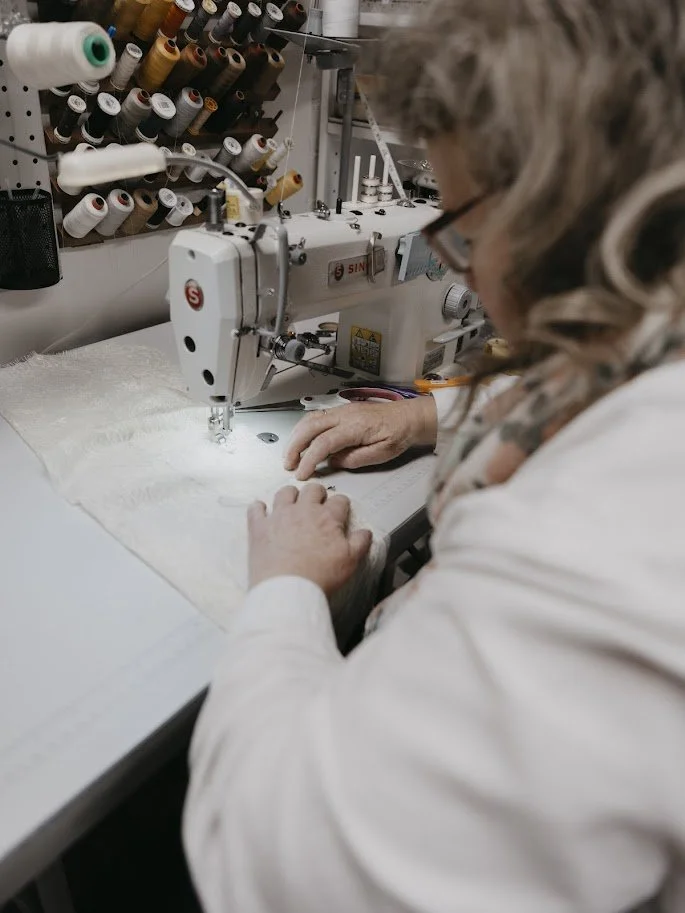
A Straight-Stitch Machine: What to Look For
If you’re buying a domestic machine, adjustable stitch length and stitch width are non-negotiables. That’s what separates the $100 machines from the $250 machines—and it’s worth every cent.
My first machine was a basic Brother model, a wedding present from my stepmum. It came from the post office. I sewed baby clothes on that thing. Then I won another Brother from a Spotlight raffle (yes, really), and that one had stitch length and width adjustments. I started my business with that second machine in 2018. Curtains, jeans, wedding dresses—everything.
So don’t let anyone tell you you need an expensive machine to get started. A Singer or Brother Heavy Duty, or a mid-range Janome, is more than enough for a beginner or small business. Expect to pay around $400–$500 for a good one new, or less second-hand.
Tip: Spotlight always has sales. Wait for one.
Overlockers: The Unsung Hero
If you’re planning to sew clothes or do alterations, an overlocker is your best friend. Clean seams, stretchy fabrics, rolled hems—it does all the things a regular machine can’t do well. I have two domestic overlockers (both Janome) and an industrial one now, but I still use the domestic for delicate rolled hems.
If you’re buying new, Janome is solid. If you’re buying second-hand, look around on Marketplace. In fact, this Singer overlocker popped up for me recently—great value if it's in good condition.
Expect to pay:
$250–$500 second-hand or entry-level new
$1,000+ for high-end or industrial models
Brands I Trust
Here’s how I think of the common ones:
Brother – Great for beginners, easy to use, often on special. I started with Brother and loved it.
Janome – Reliable, solid, a bit like the Toyota of sewing machines. My daughter has one now.
Singer – Bit more polarising. I have three Singer industrials (591 or 691 series—I forget!), and they’re brilliant. One of my seamstresses uses the Singer Heavy Duty and loves it.
Juki – If you want the best of the best, especially for industrial straight-stitch machines, Juki is king. They’re fast, precise, and worth every cent—if you can afford the $2,000–$3,000 price tag.
If you can wait, Marketplace is your friend. I got two of my industrial Singers for $700 each, second-hand. With a trailer and a little patience, you can absolutely score an incredible machine within budget.
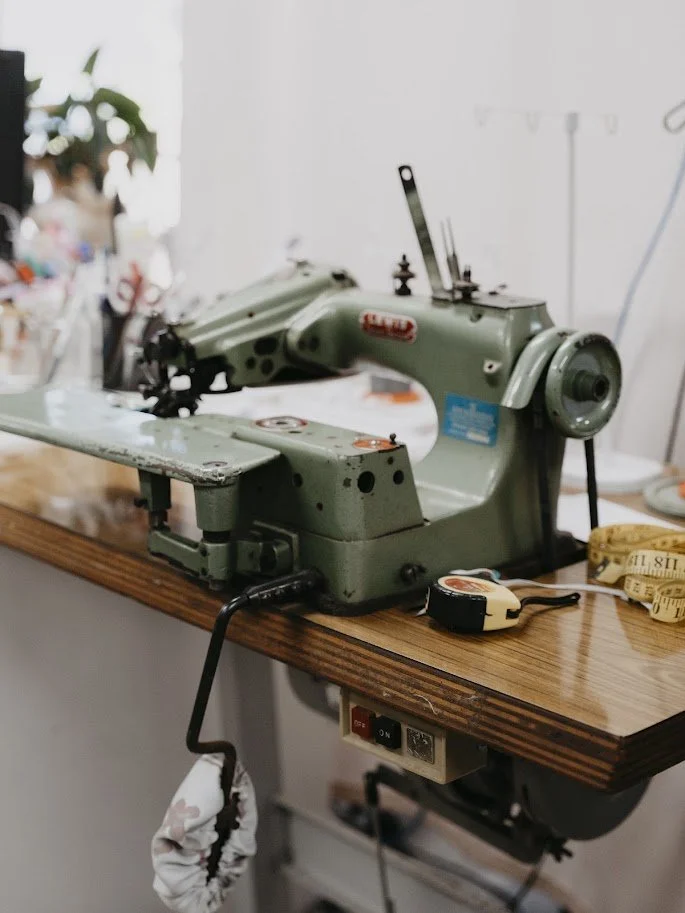
Industrial vs Domestic: What’s the Difference?
If she’s planning to sew a lot—or go into production work—get an industrial.
It’s like upgrading from a butter knife to a chainsaw. Same job, wildly faster.
Speed: Industrial machines can run at 3,000+ stitches per minute (domestics usually top out at 800–1,000).
Durability: They’re workhorses, built to sew 8 hours a day.
Learning curve: There is one, especially with clutch motors. But it’s worth it.
Even my kids complain the school machines are too slow now, after sewing at home. 😂
What About Buttonholes?
Let’s be honest—buttonholes are fiddly on most machines. You don’t need them often. If you really need one, use a domestic machine with an automatic buttonhole setting, or borrow one.
Final Advice
Some people sew their whole lives with a domestic machine and do amazing work. Just like a baker doesn’t need a commercial kitchen to make great cake, it’s not the machine—it’s the hands that guide the fabric.
But if you want to make things faster, better, and more comfortably:
Learn batching (seriously—it’ll cut her sewing time in half)
Service the machine regularly
Invest slowly as your skills grow
Sewing Machine Decision Chart
What machine should I get?
Use this simple questionnaire to help you (or your daughter) decide based on budget, goals, and sewing plans.
Are you just starting out or sewing as a hobby?
→ Yes
→ Buy a domestic machine with adjustable stitch length and width
Budget: $250–$500
Good options: Brother, Janome, Singer Heavy Duty
Wait for sales at Spotlight or Lincraft
Add an overlocker if you're sewing clothing
→ No → Next question
Are you sewing clothes or stretch fabrics?
→ Yes
→ Get an overlocker (Janome or Singer second-hand)
Budget: $250–$500
Optional: rolled hem feature
→ No → Next question
Are you starting a business or sewing a lot?
→ Yes
→ Consider upgrading to an industrial straight-stitch machine
Budget: $700–$2,000 (second-hand or new)
Brands: Singer industrial, Juki
Much faster and stronger
Add a domestic overlocker (or industrial later)
→ No → Stick with a good-quality domestic machine
Want the best setup on a tight budget?
→ Look second-hand on Facebook Marketplace
Search for: “Singer industrial”, “Janome overlocker”, “Heavy Duty sewing machine”
Set up alerts for your area
Machines under $1,000 pop up often
What Does Polarising Mean?
When I said Singer is “polarising,” I meant that people tend to either love them or hate them. Some sewists swear by their Singer machine, others have had a bad experience and avoid them altogether.
It’s a bit like the Holden vs Ford rivalry—both work, both have fans, and it often just comes down to personal preference, familiarity, or what you learnt on.
Ready to take your sewing to the next level?
Whether you're hemming jeans or starting a studio, the right machine makes all the difference. Got a question about what machine to buy? I’m always happy to chat—get in touch here, or follow along on Instagram for more behind-the-scenes tips.
