

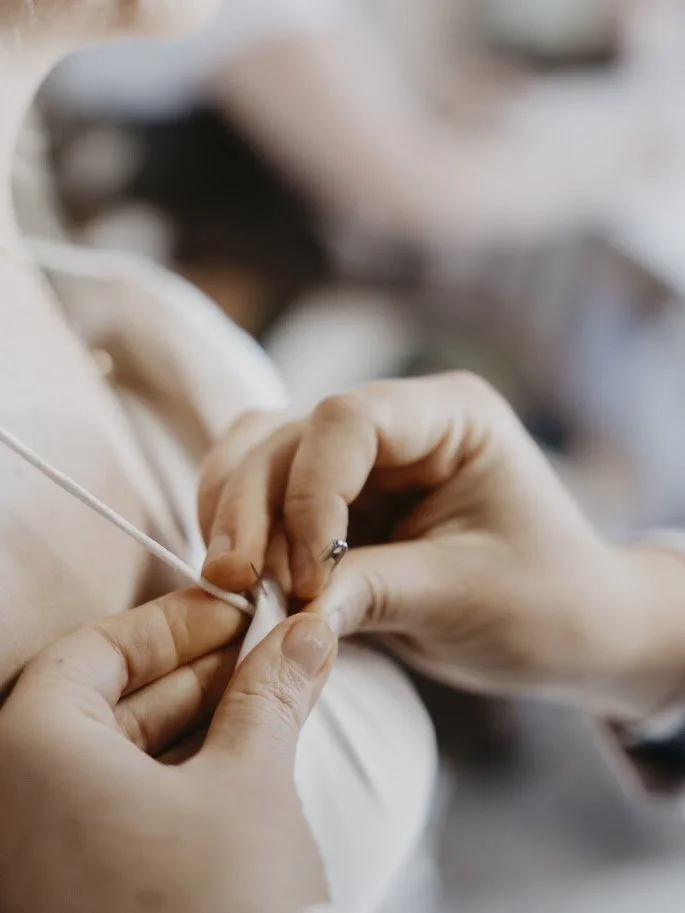
When a bride finds her dress there is usually a good deal of crying in the store. Her mother cries the most. Then a paper is signed and a deposit is paid, and everyone goes home believing the hard part is over.
I am sorry to say it is only half over. I have sewn wedding dresses for nine years, and nearly every gown that comes through my door needs altering before it can be worn. This is the ordinary way wedding dresses are bought and sold, and no one is at fault. Still, I think a bride ought to be told so before she signs the paper.
The dress is ordered to a chart
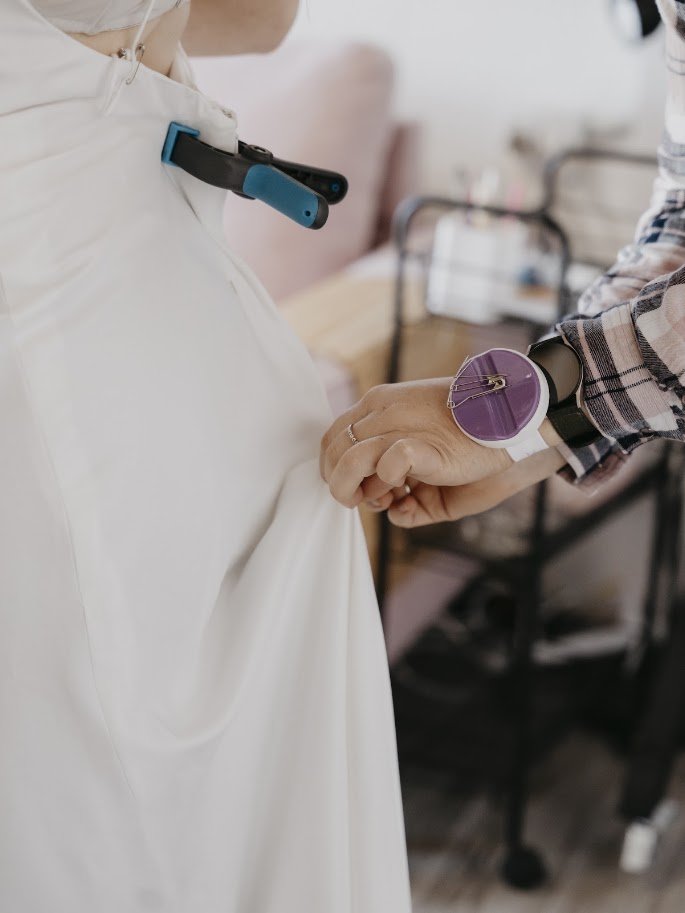
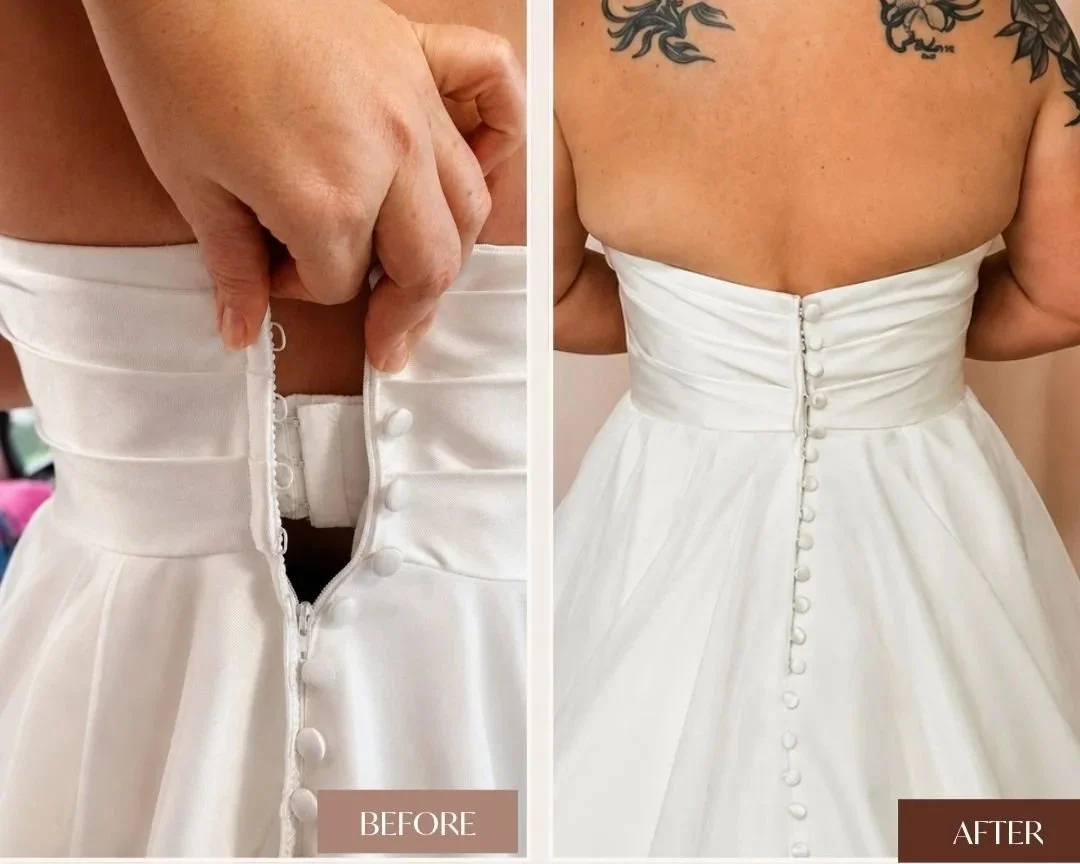
The gown you try on in the store is a sample. It was made to a standard size, and the consultant holds it to your shape with a row of clips down the back where you cannot see them. So the mirror shows you a dress that fits, when the dress itself does nothing of the kind.
When your own gown is ordered, the store measures you and looks up the designer's chart. Bridal sizes run small and they differ from one designer to the next. The usual plan is to order the size that fits your largest measurement and take in the rest later.
"Later" means me, or someone like me.
So if your dress arrives loose at the waist, with the hem lying in a pool on the floor, do not be alarmed. It was ordered that way on purpose.
Alterations are a separate bill
Most stores do not include alterations in the price of the gown. Many do no sewing at all and will hand you a list of seamstresses to ring.
This means the figure on the tag is less than your dress will finally cost. How much less depends on the work. Taking up a plain hem is a small job. Resizing a whole gown and rebuilding its bodice is a large one. Whatever the job, you should be given the price plainly after your first fitting, with nothing added at the end. You can see our own prices before you ever walk in.
Alterations are fair value for the work in them. They belong in your budget from the start.
Book earlier than seems sensible
Brides often ask me when they should book. My answer is always sooner than they expected.
A gown commonly arrives two or three months before the wedding. Fitting it takes several visits, a couple of weeks apart, and I have written about how long each fitting takes if you would like to plan your days. At each one I pin and sew, and then try the dress on you again to see what has changed.
We usually hold the first fitting six to eight weeks before the day and the last one in the final week. That last fitting matters a great deal, for bodies change in two months and so do plans.
A bride who leaves it late has fewer choices. Rushed work costs more, and there is no time for a second adjustment if the first is not quite right. You may book your seamstress before the gown has even arrived. Many of my brides do.
Some things cannot be done
A store will sometimes tell a bride that anything can be fixed in alterations. That is nearly true.
Taking a gown in is generally simple. Letting one out depends on how much spare fabric the maker left inside the seams, and some makers leave hardly any. When there is none, a gusset will often do what the seams cannot. Beading and lace applique slow everything down, because each piece must be lifted off by hand and sewn back when the seam is done. Changing a neckline means taking the bodice apart and building it again.
A good seamstress will look at your own gown and tell you honestly which of your wishes are easy and which are unwise. You will be glad of that honesty by the wedding day.
Before you sign
Ask the store whether alterations are included and who will do them. Ask what you ought to set aside for the work. Then book your seamstress, and bring your wedding shoes and undergarments to every fitting.
That is all the secret there is. A gown made to a chart is altered until it fits one particular bride, and that is my trade. If you would like to know what a first fitting with us looks like before you book one, you may read about it, and our FAQ page answers most of what brides ask next.
Planning your own dress transformation? Whether you're dreaming of a custom bustle, veil, or a complete fit overhaul, we're here to help. Get in touch or see more transformations.
